Credential
Legal name, jurisdiction, business registration, corporate purpose, public perimeter and contact route.
 Tamam ShudPrivate family holding company
04
Disclosure
A private company need not become opaque. It does need to distinguish information that belongs in public, controlled and private channels.

Publicity and transparency are not synonyms.
The disclosure ledger
Not every fact belongs on a public website. That is not a licence for obscurity; it is a reason to place evidence in the right channel.
The public layer establishes identity and perimeter. Controlled disclosure supports banking, KYC, professional advice and legitimate due diligence. Private information remains private unless a proper purpose requires otherwise.
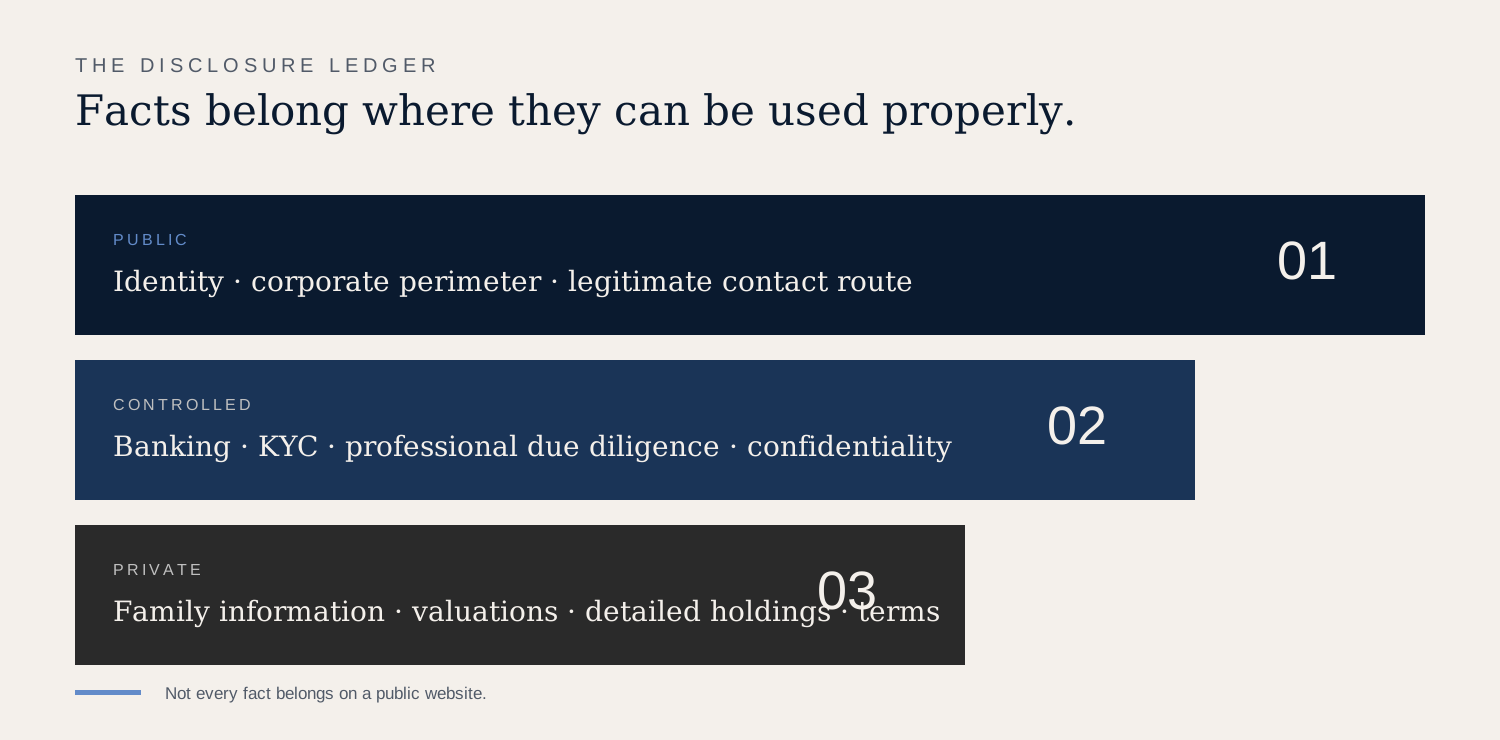
Legal name, jurisdiction, business registration, corporate purpose, public perimeter and contact route.
Corporate records, ownership documents, banking information and professional due-diligence materials where genuinely required.
Family information, valuations, detailed holdings, transaction terms and other matters without a public purpose.

Appropriate friction
Relevant information can be supplied to banks, counterparties and professional advisers through an appropriate process. The absence of a public portfolio page does not prevent proper verification.
Discretion is useful only when evidence remains available to those entitled to see it.
Public holdings
Detailed holdings are not published as a matter of public policy.
Selected affiliations may be identified where a legitimate corporate, banking, governance or transaction purpose makes that useful. Scale, performance and valuation claims are not manufactured to fill empty space.
An intelligent visitor will notice what the company does not say. That is preferable to asking the visitor to believe unsupported adjectives.
Proportionate disclosure.
Public enough to establish the company. Controlled enough to support verification. Private where no wider purpose exists.